NYC Delivery Rules
NYC Congestion Pricing for Deliveries: Hours, Toll Rates, and the Zone
Congestion pricing hours, 2026 toll rates for cars, vans, and trucks, the zone boundaries, and practical ways NYC businesses can keep delivery costs down.
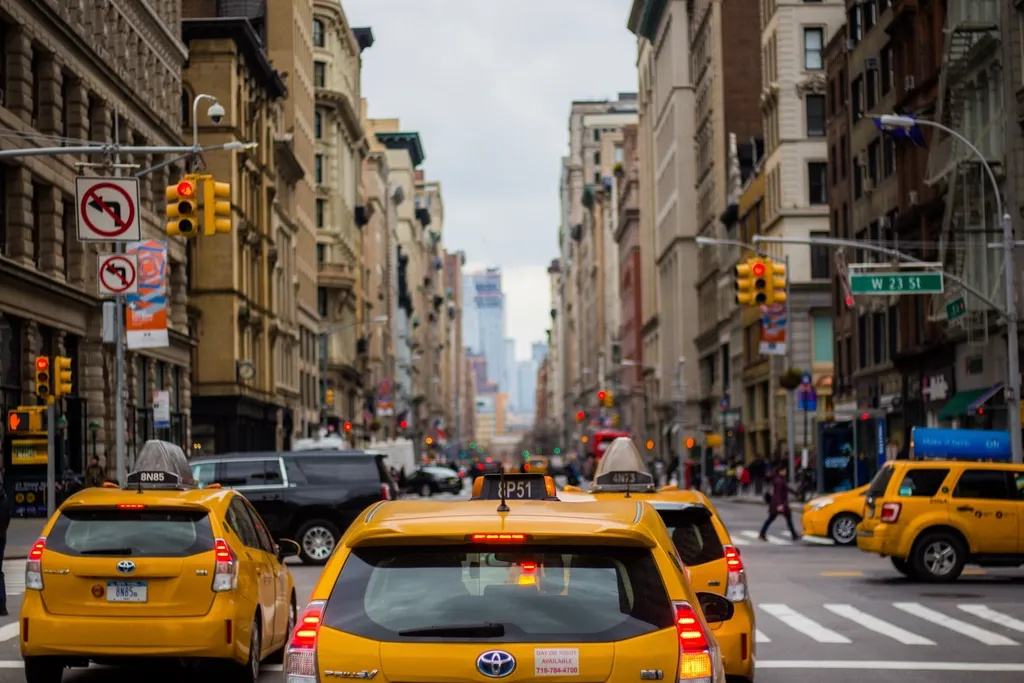
Every delivery that enters Manhattan at or below 60th Street now carries a toll. For a business that sends or receives goods in Midtown, the Financial District, or anywhere in between, that toll is a line item on every run, and it depends on three things you can partly control: what vehicle makes the trip, what time it enters, and how it pays.
This guide covers the congestion pricing hours, the current toll rates by vehicle type, where the zone starts and stops, and how to plan deliveries so the charge stays as low as possible.
Key takeaways
- Peak hours are 5 a.m. to 9 p.m. on weekdays and 9 a.m. to 9 p.m. on weekends. Everything else is the overnight rate, 75% cheaper.
- With E-ZPass, a car or standard van pays $9.00 at peak; a small truck pays $14.40; a large truck pays $21.60.
- Cars and motorcycles pay once per day. Trucks pay every time they enter the zone.
- Rates are locked through 2027, then rise to $12 (cars) in 2028 and $15 in 2031.
What Are the NYC Congestion Pricing Hours?
Congestion pricing has two time periods, and the toll you pay is set by the moment your vehicle enters the zone:
| Period | Weekdays | Weekends |
|---|---|---|
| Peak | 5 a.m. – 9 p.m. | 9 a.m. – 9 p.m. |
| Overnight | 9 p.m. – 5 a.m. | 9 p.m. – 9 a.m. |
These hours come from the MTA’s official Central Business District toll schedule, which applies to every vehicle class. The overnight rate is one quarter of the peak rate across all vehicle types, which makes timing the single biggest lever a business has.
Weekends matter too. Saturday and Sunday mornings stay on the overnight rate until 9 a.m., four hours later than on weekdays. A bakery restocking cafés on a Saturday morning can often finish its Manhattan drops before the peak rate starts.
How Much Is Congestion Pricing in NYC?
For most delivery vehicles, the peak toll is $9.00 to $21.60 per entry with E-ZPass, depending on the vehicle class. These are the Phase 1 rates, in effect from 2025 through 2027, published in the MTA toll schedule:
| Vehicle class (E-ZPass) | Peak | Overnight |
|---|---|---|
| Cars, SUVs, and standard vans | $9.00 | $2.25 |
| Small trucks (box trucks, high-roof vans) | $14.40 | $3.60 |
| Large trucks (tractor-trailers) | $21.60 | $5.40 |
| Motorcycles | $4.50 | $1.05 |
Paying without E-ZPass costs 50% more. Through Tolls by Mail, a car pays $13.50 at peak and a small truck pays $21.60, the same as a large truck with E-ZPass. Any vehicle that enters the zone regularly should have an E-ZPass tag linked to its plate.
Which vans count as trucks?
This is where many delivery businesses get surprised. The MTA classifies vans by their body, not their registration:
- Charged the passenger rate ($9.00): vans without a raised roof above the windshield and without a modified body behind the driver’s cab. A standard minivan or a low-roof cargo van usually falls here.
- Charged the small-truck rate ($14.40): vans with an extended roof above the windshield, or with a modified body behind the cab. Most high-roof cargo vans fall here.
The MTA’s FAQ confirms this split. For a business choosing between vehicles for a regular Manhattan route, the difference is $5.40 per peak entry, before the daily-cap rules below make it larger.
How Many Times Do You Pay per Day?
Cars and motorcycles pay at most once per day. Trucks pay on every entry. The MTA toll schedule sets a daily cap of one charge for passenger vehicles and motorcycles, while small and large trucks have no daily cap.
That rule changes how you should plan routes:
- A passenger-class vehicle that makes five separate trips into Midtown in one day pays $9.00 once.
- A small truck that leaves and re-enters the zone five times in the same day pays $14.40 five times, or $72.00.
- A vehicle that stays inside the zone, even parked overnight, is not charged again until it leaves and comes back in.
For truck-class vehicles, the cheapest plan is usually to enter once, complete every Manhattan stop in a single loop, and exit. Leaving to pick up more goods in Queens or New Jersey and coming back triggers a second full toll.
Where Is the Congestion Relief Zone?
The zone covers local streets and avenues in Manhattan at or below 60th Street. Three roadways are excluded, according to the MTA’s zone overview:
- FDR Drive
- West Side Highway / Route 9A
- The Hugh L. Carey Tunnel connections to West Street
A vehicle that stays on those roads without exiting onto local streets below 60th Street is not charged. The moment it turns onto a local street in the zone to make a drop, the toll applies.
The FDR exclusion helps passenger-class vehicles more than trucks, because commercial vehicles are prohibited on the FDR Drive under the city’s commercial vehicle restrictions. Trucks passing along the west side use the surface-level West Side Highway instead.
Deliveries between the outer boroughs, and within Manhattan above 60th Street, are not affected. A run from Brooklyn to Queens or the Bronx never touches the zone.
Tunnel Crossing Credits
If a vehicle enters the zone through a tolled tunnel during peak hours, part of that tunnel toll is credited against the congestion charge. With E-ZPass in Phase 1:
| Entering via | Car credit | Small-truck credit |
|---|---|---|
| Lincoln or Holland Tunnel | $3.00 | $7.20 |
| Queens-Midtown or Hugh L. Carey Tunnel | $1.50 | $3.60 |
Passenger vehicles can receive up to $5.00 in crossing credits per day. Credits apply only at peak, and only with E-ZPass. The free East River bridges, such as the Williamsburg, Manhattan, and Queensboro, carry no credit because they carry no toll.
Will the Toll Go Up?
Yes, on a fixed schedule. The MTA toll schedule sets three phases for E-ZPass peak rates:
| Phase | Years | Car / standard van | Small truck | Large truck |
|---|---|---|---|---|
| Phase 1 | 2025–2027 | $9.00 | $14.40 | $21.60 |
| Phase 2 | 2028–2030 | $12.00 | $19.20 | $28.80 |
| Phase 3 | 2031 onward | $15.00 | $24.00 | $36.00 |
The schedule also lets the MTA charge up to 25% more on Gridlock Alert Days, which the city designates during the UN General Assembly and parts of the holiday season.
The program itself has survived legal challenges. Tolling began on January 5, 2025, and on March 3, 2026, a federal judge ruled that the U.S. Department of Transportation lacked the authority to rescind its approval, keeping the toll in place (NY1, March 3, 2026). The federal government said it was reviewing an appeal, so businesses should plan around the toll while watching for changes.
How Businesses Can Keep Delivery Toll Costs Down
Congestion pricing is a real cost, but most of it is controllable with scheduling and vehicle choices.
- Move flexible deliveries to the overnight window. Restocking, inventory transfers, and next-morning orders that can arrive before 5 a.m. on weekdays, or before 9 a.m. on weekends, pay 25% of the peak toll. Many Manhattan buildings also have easier loading-dock access early in the morning.
- Match the vehicle to the load. If a delivery fits in an SUV or a standard van, sending a high-roof van or box truck adds $5.40 or more per entry. For small, frequent loads such as catering trays or floral arrangements, passenger-class vehicles are usually the cheaper fit.
- Batch stops inside the zone. Truck-class vehicles pay per entry, so a single planned loop through Midtown and Lower Manhattan costs one toll instead of several. Multi-stop routes also spread that one toll across every delivery on the route.
- Use E-ZPass on every vehicle. Tolls by Mail costs 50% more at every rate level.
- Enter through a tunnel only when it is already the best route. Crossing credits reduce the charge but never make a tunnel cheaper than a free bridge. They simply avoid paying twice.
Frequently Asked Questions
Do delivery trucks pay congestion pricing more than once a day?
Yes. Small and large trucks are charged every time they enter the zone. Only passenger vehicles and motorcycles have a once-per-day cap.
Is congestion pricing charged on weekends?
Yes. Peak rates apply from 9 a.m. to 9 p.m. on Saturdays and Sundays. Before 9 a.m. and after 9 p.m., the overnight rate applies.
Do I pay if I drive through on the FDR Drive or West Side Highway?
No. Vehicles that stay on the FDR Drive, the West Side Highway/Route 9A, or the Hugh L. Carey Tunnel connections to West Street are not charged, as long as they do not exit onto local streets in the zone.
Does 60th Street itself count as inside the zone?
Yes. The zone includes local streets and avenues at and below 60th Street.
Who pays the toll on a courier delivery?
The toll is charged to the vehicle, so it is part of the delivery cost. Whether it is shown as a separate line item or included in the price depends on the delivery provider. You can see how route, timing, and vehicle size affect the total with our delivery cost calculator.
The Bottom Line
Congestion pricing adds a predictable, schedulable cost to Manhattan deliveries below 60th Street. The businesses that pay the least are the ones that deliver outside peak hours when they can, send the smallest vehicle that fits the load, and group their Manhattan stops into single trips. For more on how Manhattan deliveries work day to day, see our Manhattan courier guide.