How to Get Your Product Into Stores: A Guide for NYC Food Makers
How to get your product in stores: the licenses, barcodes, labels, pricing, and delivery plan a New York food or beverage maker needs before pitching grocery stores and shops.
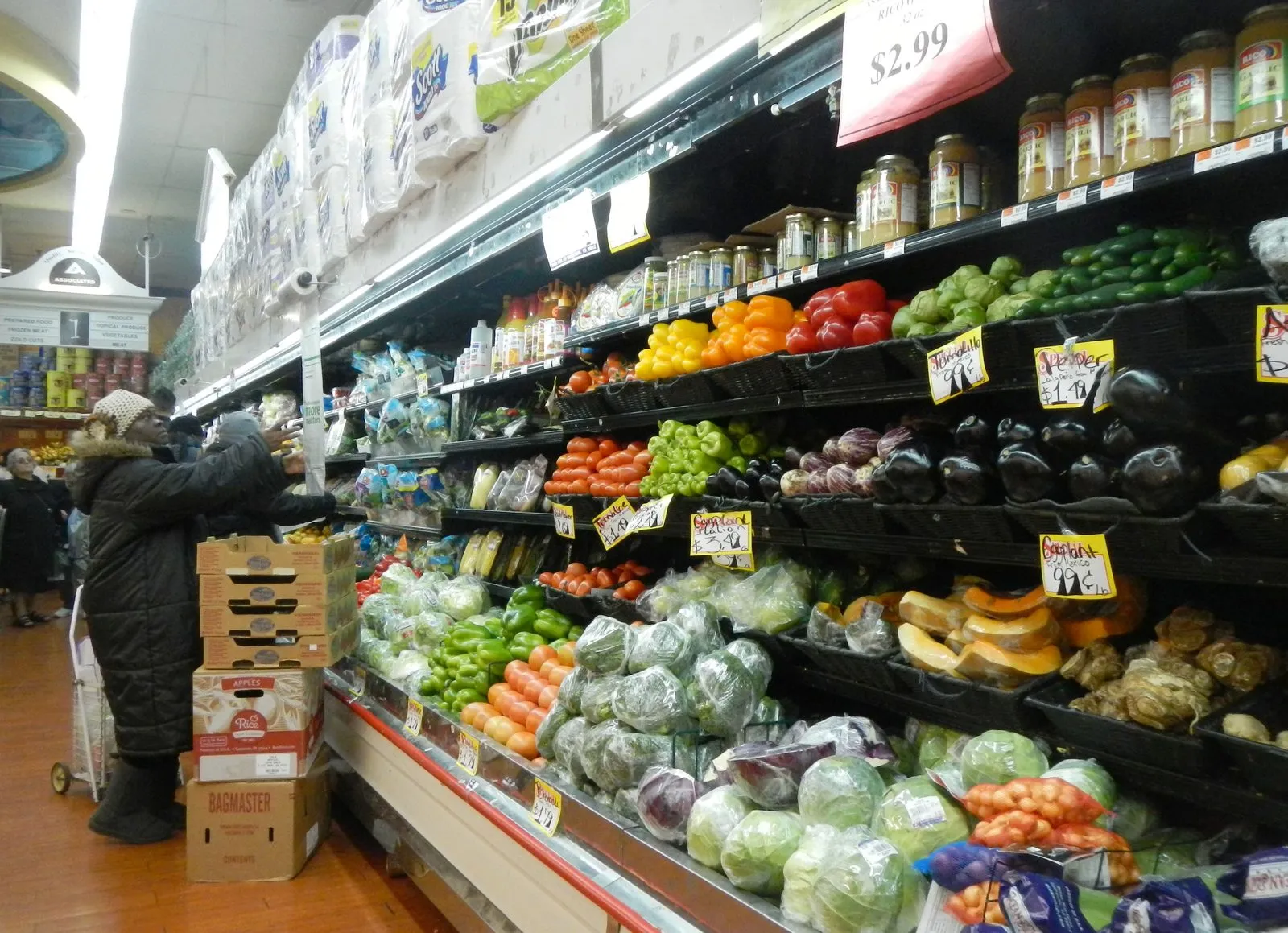
To get your product into stores, make it shelf-ready first, then start small. That means the right state license, a compliant label, a barcode, wholesale pricing that leaves the store a margin, and a delivery plan you can keep. Then pitch a handful of independent shops near you, prove the product sells, and use those sales to win bigger accounts.
Store buyers say no to good products all the time. Usually it’s not the taste. It’s a missing barcode, a price with no room for the store’s markup, or a maker who can’t restock on schedule. This guide covers each of those for food and beverage makers in New York.
Key takeaways
- Selling to stores usually means a state license. In New York, most food processors need an Article 20-C license from Agriculture and Markets.
- Barcodes cost less than many makers expect. A single GS1 barcode is $30; a prefix for up to 10 products is $250.
- Price for the store’s margin. Your wholesale price has to leave room for the retailer’s markup.
- Start with independent shops. The person you pitch can often decide on the spot.
- Reliable restocking keeps you on the shelf. An empty slot gets filled by another brand.
Step 1: Make Sure You’re Licensed to Sell Wholesale
Before a store can buy from you, you need to be allowed to make food for resale. In New York, that usually runs through the state Department of Agriculture and Markets.
An Article 20-C license is New York’s license for food processors: manufacturers, wholesale bakeries, and other businesses that cook, bake, bottle, or package food. The state’s licensing overview lists cooking, baking, canning, bottling, and repacking ready-to-eat foods as activities that need it (NYS Agriculture and Markets). The application form lists a $175 fee for businesses with 10 or fewer full-time employees and $400 for larger ones, with no fee for first-time applicants in a recognized incubator (Form FSI-303).
There is one exception worth knowing. Home processors registered with the state can sell certain shelf-stable foods wholesale to restaurants, cafes, and grocery stores, but only within New York State (NYS Agriculture and Markets). Our guide to New York’s cottage food law lists what qualifies.
| Your situation | What you likely need |
|---|---|
| Shelf-stable baked goods made at home, sold in NY | Home processor registration |
| Food made in a commercial or shared kitchen for resale | Article 20-C food processing license |
| Refrigerated or perishable products | Article 20-C, plus a cold-chain plan |
| Selling to stores in other states | Article 20-C; home processors can’t sell out of state |
Call the agency and describe exactly what you make. Get the answer in writing before you print labels.
Step 2: Build a Label Stores Will Accept
A store buyer checks the label before tasting the product. A packaged food label generally needs:
- The product name.
- Net quantity (weight or volume).
- An ingredient list in order of weight.
- Allergen statements for the major food allergens.
- Your business name and address.
- A Nutrition Facts panel, unless you qualify for an exemption.
Small makers may not need a Nutrition Facts panel right away. The FDA’s small business exemption covers products sold by firms with fewer than 100 full-time equivalent employees that sell fewer than 100,000 units of that product a year, if they file a notice each year (FDA). Products that make nutrition claims, such as “low fat,” don’t qualify. Many buyers ask for the panel anyway, so plan for it.
Step 3: Get a Real Barcode
Most stores scan everything at checkout, so they want a UPC barcode on every product. A UPC is a scannable number that identifies your product and your company.
Buy it from GS1 US, the organization that issues these numbers in the United States. Barcodes bought from it identify you as the brand owner, which GS1 notes is information retailers look for (GS1 US).
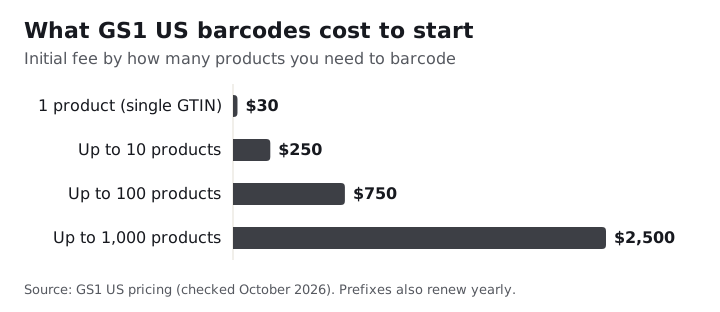
| What you buy | Initial fee | Yearly renewal |
|---|---|---|
| One barcode (single GTIN) | $30 | $0 |
| Company prefix, up to 10 products | $250 | $50 |
| Company prefix, up to 100 products | $750 | $150 |
| Company prefix, up to 1,000 products | $2,500 | $500 |
Each flavor and size needs its own barcode. Three flavors in two sizes is six barcodes, so a 10-item prefix often makes more sense than single codes.
Step 4: Set Wholesale Prices That Work for the Store
Your wholesale price is what the store pays you. Your suggested retail price is what the shopper pays. The gap is the store’s margin, and if it’s too small, the buyer passes.
Work backward from the shelf:
- Pick a retail price that fits next to similar products on the shelf.
- Subtract the store’s margin. Ask each buyer what they expect; it varies by store and category.
- Check that the wholesale price covers your ingredients, packaging, labor, delivery, and a profit.
If the math doesn’t work, change the recipe, the pack size, or the packaging before you pitch. Don’t plan on fixing it after the first order.
Big chains may also charge slotting fees. Slotting fees are one-time payments a supplier makes so a retailer will place a new product on its shelves. The FTC studied the practice in five grocery categories and found that both the chance of being charged and the size of the fee varied widely by category (FTC). Fees like these are one reason most small brands start with independent stores. Ask any chain buyer about slotting before you agree to a launch.
Step 5: Pitch Independent Stores First
Independent grocers, specialty food shops, cafes, and delis are the best first accounts. The person you talk to can often say yes on the spot.
For example, a hot sauce maker in Queens might start with five shops within a few miles of the kitchen. Each one is close enough to restock by hand, and each one becomes proof for the next pitch.
How to pitch:
- Visit at a quiet time, such as a weekday morning. Ask for the person who buys your category.
- Bring samples and a one-page sell sheet with your price, case size, shelf life, and barcode.
- Offer a small first order and an easy reorder process.
- Offer a demo day where you sample the product in the store.
- Follow up in a week and ask how it’s selling.
Start in your own borough. Food shoppers in Brooklyn and Queens know their local shops well, and a product that sells there gives you a story to tell the next buyer.
Step 6: Have Your Paperwork Ready
Stores and distributors will ask for documents before the first order. Have these ready:
- Your state license or registration.
- A W-9 so they can pay you.
- A certificate of insurance, usually showing product liability coverage. Our guide to certificates of insurance explains what buyers look for.
- A sell sheet and price list. A sell sheet is a one-page summary of your product, price, case size, and ordering details.
- Your sales tax registration, since many products are sold to stores for resale.
Step 7: Plan Delivery and Restocking
Getting into a store is the start. Staying on the shelf depends on restocking it before it runs out.
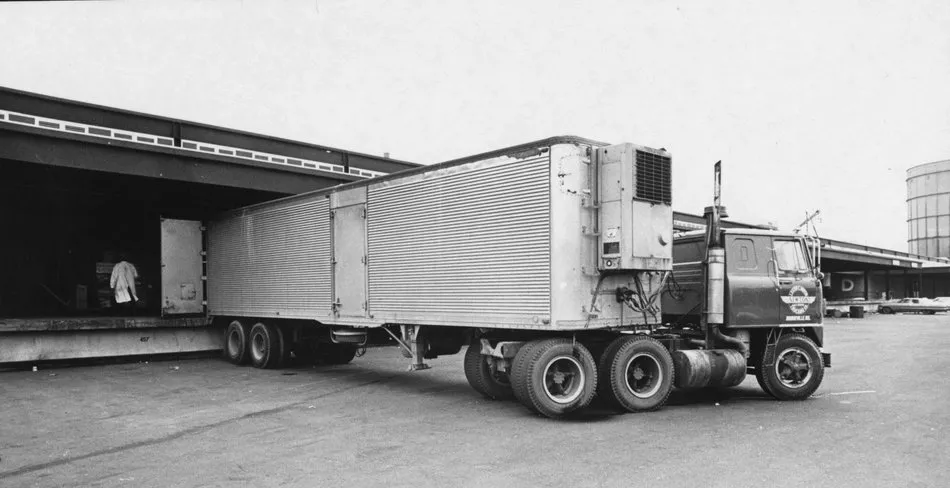
Small brands usually deliver themselves at first. That works for a few stores. It breaks down at 15 or 20, spread across the city, with different receiving hours.
Plan for:
- Receiving windows. Many stores only accept deliveries at certain hours.
- Curb and parking rules. Our guide to commercial vehicle parking in NYC covers loading zones and time limits.
- Proof of delivery, so you can show what arrived and when if there’s ever a dispute.
- Temperature control for refrigerated products.
Once you have several accounts, a set weekly delivery route keeps shelves full without taking a whole day out of production.
Step 8: Grow Into Distributors
A distributor is a company that buys your product in bulk and resells it to many stores. Distributors make it possible to reach hundreds of stores without delivering to each one.
Most distributors want to see that a product already sells. Use your direct accounts to prove it. Track how many units each store sells per week, how often they reorder, and which stores carry you longest. Those numbers are your pitch.
If you also ship orders to customers, our guide on how to ship baked goods covers packaging and timing for perishable products.
Frequently Asked Questions
How do I get my product into grocery stores?
Get licensed, add a compliant label and a GS1 barcode, set a wholesale price that leaves the store a margin, and pitch independent stores first. Use those sales to approach larger chains and distributors.
Do I need a license to sell food to stores in New York?
Usually yes. Most food made for resale needs an Article 20-C license from the NYS Department of Agriculture and Markets. Registered home processors can sell certain shelf-stable foods to stores, but only within New York State.
How much does a barcode cost?
A single GS1 US barcode costs $30 with no renewal fee. A company prefix for up to 10 products costs $250, plus $50 a year.
What are slotting fees?
Slotting fees are one-time payments a supplier makes so a retailer will place a new product on its shelves. They are a large-chain practice, and the amount varies widely by category. Ask about them before agreeing to a chain launch.
Should I sell to stores directly or through a distributor?
Start direct. It is easier to win a few local stores, and their sales data helps you win a distributor later.
How do small food brands deliver to stores?
Most start by delivering themselves, then move to a set weekly route as they add accounts. Many use a courier once deliveries take more time than production.
The Bottom Line
Getting your product into stores is mostly preparation. License, label, barcode, and price come first, then a few local stores, then distributors. Restocking on time is what keeps your spot. When deliveries start to crowd out production, see how wholesale delivery in NYC and food and beverage delivery work, or price a store route.