New York Cottage Food Law: Selling Homemade Food as a Home Processor
New York's cottage food law explained: how the Home Processor registration works, which homemade foods you can and can't sell, where you can sell them, the label you need, and the delivery rules.
New York’s cottage food law is the Home Processor exemption. It lets you make certain shelf-stable foods in your home kitchen and sell them within New York State without a food processing license, as long as you register with the state for free and stick to the approved list of foods.
The exemption is run by the New York State Department of Agriculture and Markets, and it applies statewide, including to home bakers in the five boroughs. What trips people up is the detail: which frostings are allowed, whether you can sell to a cafe, and whether orders can be delivered.
This guide is for general information and isn’t legal advice. For questions about a specific product, contact the Department of Agriculture and Markets.
Key takeaways
- You need a Home Processor registration from the NYS Department of Agriculture and Markets. It’s free and has no expiration date.
- Only non-potentially hazardous foods that need no refrigeration qualify: most baked goods, standard fruit jams, candy, snacks, and repackaged dry goods.
- You can sell retail and wholesale, including to local restaurants, cafes, and grocery stores, and through home delivery and internet sales.
- Everything must be sold within New York State. Shipping out of state isn’t permitted.
- Every item needs a label with your name, full address, ingredients, allergens, and net quantity.
What Is New York’s Cottage Food Law?
New York doesn’t have a statute called a cottage food law. What it has is an exemption for “home processors” in state regulation (1 NYCRR 276.4). The Department of Agriculture and Markets describes it this way: registered home processors are exempt from the Article 20-C food processing license, which lets them prepare food in a home kitchen “for wholesale or retail sale” (NYS Department of Agriculture and Markets).
A few features set New York apart from many other states:
- Registration is required, but it’s free. The Department says there is currently no fee.
- It doesn’t expire. The registration has no expiration date, but it’s tied to your address, so moving means registering again.
- Wholesale is allowed. Many states limit cottage food to direct sales. New York lets home processors sell to local restaurants, cafes, and grocery stores within the state.
- Kitchens aren’t routinely inspected. The Department says home processor kitchens are reviewed on a complaint basis only.
What Foods Can You Sell From Home in New York?
The exemption covers foods that are not potentially hazardous and don’t need refrigeration. The Department publishes an approved list, which includes:
| Category | Examples on the approved list |
|---|---|
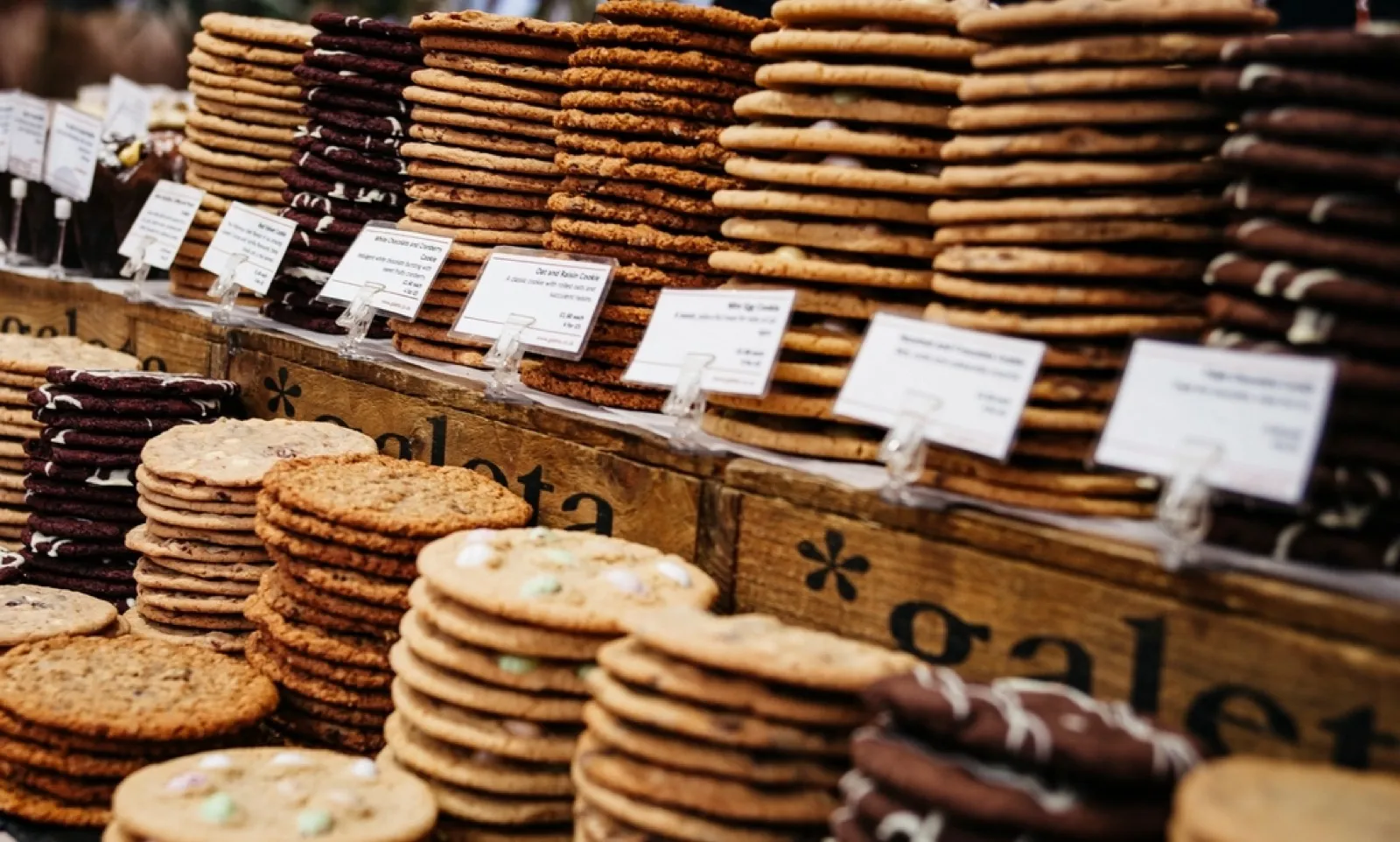
| Baked goods | Breads, rolls, cinnamon rolls, biscuits, bagels, muffins, cookies, biscotti, baklava, cakes, cupcakes, cake pops, brownies, scones, double-crust fruit pies, doughnuts without cream fillings |
| Jams and preserves | Jams, jellies, and marmalades made with high-acid fruits such as apple, blueberry, and strawberry |
| Confections and snacks | Fudge, peanut brittle, popcorn and caramel corn, toffee and caramel apples, granola, trail mix, crackers, pretzels, waffle cones, pizzelle |
| Repackaged dry goods | Commercially dried spices and herbs, dried fruit, dried soup mixes, dry baking mixes, seasoning salt |
Several items come with conditions. Nuts in brittle, granola, and trail mix have to be commercially roasted. Repackaging is allowed, but drying your own herbs or fruit is not.
What Foods Are Not Allowed?
This is where most home bakers get caught, because several bakery staples are on the prohibited list. According to the Department, home processors can’t sell:
- Anything that requires refrigeration, including cheesecake, cream-filled pastries, cream or meringue pies, and quiche
- Frostings made with dairy or eggs, which rules out traditional buttercream and cream cheese frosting
- Tempered chocolate or candy melts used for dipping or coating, and products with raw nuts
- Vegetable breads and “no-bake” products
- Pickles, sauces, salsas, mustards, ketchups, vinegars, and salad dressings
- Most specialty jellies, such as pepper, wine, vegetable, and flower jellies, plus chutneys and fruit syrups
- Cooked or canned fruits and vegetables, oils, nut butters, and freeze-dried foods
- Meat, fish, poultry, cheese, yogurt, butter, and beverages
- Anything containing alcohol
- Roasted or ground coffee beans
If your menu depends on any of these, the home processor route won’t cover it. You’d need to work from a licensed commercial kitchen under an Article 20-C license or a health department permit instead. The Department also notes that you can’t hold a home processor registration alongside a Department of Health permit or an Agriculture and Markets license.
Pet treats are a separate matter. They can be made at home, but the Department says they require a separate registration.
How Do You Register as a Home Processor?
The process is paperwork, not an inspection.
- Check your product list against the approved and prohibited foods.
- Complete the Home Processor Registration Request Form from the Department’s website, listing the products you plan to make.
- Test your water if you’re on a private well. The Department requires a coliform test from a certified lab with the application. Homes on municipal water, which covers New York City, don’t need this.
- Submit the form by email or by mail to the Department’s Food Safety and Inspection division in Albany.
- Wait for the review. The Department says to allow up to 16 weeks, and that requests are processed in the order received.
To add products later, you submit the form again and mark it as supplemental.
Two limits are worth knowing before you invest in equipment. The Department says commercial equipment “is not considered ordinary kitchen facilities,” so the exemption is for a normal home kitchen. It also tells applicants to check with local zoning officials before starting a home-based business. In New York City, that’s worth pairing with a look at your lease or building rules.
Where Can You Sell Homemade Food in New York?
The Department lists these venues for home processors:
- Farms and farm stands
- Farmers’ markets and green markets
- Craft fairs and flea markets
- Home delivery
- Internet sales
On top of that, you may sell wholesale to local restaurants, cafes, and grocery stores within New York State.
Three rules apply everywhere you sell:
- Stay inside New York. The Department’s guidance is direct: “All items must be sold within New York State,” and shipping products out of state is not permitted.
- Package at home. Items must be pre-packaged in your kitchen. Packaging at an event isn’t allowed.
- Advertise only what’s allowed. Your website and social media can’t promote foods that are on the prohibited list.
Can You Deliver Homemade Food in New York?
Yes. Home delivery and internet sales are both on the Department’s list of allowed venues, so a home baker in Brooklyn can take an order online and have it brought to a customer in Manhattan.
The guidance doesn’t spell out who has to carry the order. What it does make clear is the boundary: the food has to be pre-packaged and labeled at home, and the sale has to stay within New York State. That means:
- Local delivery within the state fits the rules. This covers a home baker’s own drop-offs and orders going to a wholesale account such as a cafe.
- Deliveries to New Jersey don’t. An order to Jersey City or Hoboken crosses the state line, and out-of-state sales aren’t permitted for home processors.
- If you’re unsure about a delivery arrangement, ask the Department before you build a business around it.
For baked goods, the practical side matters as much as the legal one. Cookies, loaves, and unfrosted cakes travel well in snug boxes, kept flat and out of the sun. Our guide on how to ship baked goods covers packing and when local delivery beats shipping. Once wholesale accounts grow past what you can drop off yourself, a bakery delivery service can run the morning route to cafes while you keep baking.
New York Home Processor Labeling Requirements
Every product needs a label. The Department requires:
- The common name of the product
- Ingredients listed in order of predominance by weight
- Allergens identified in the ingredient statement
- Net quantity
- The processor’s name and full address, including street address or PO Box, city, state, and ZIP code
The Department also asks home processors to add a phrase such as “Made in a Home Kitchen,” in type that’s 1/16th of an inch or larger.
Sales tax is separate from the registration. The Department directs sales tax questions to the New York State Department of Taxation and Finance.
A Checklist Before You Start Selling
- Confirm every product is on the approved list, including the frosting and any coating.
- Register as a home processor and wait for approval before you sell.
- Check zoning, your lease, and your building’s rules.
- Design a compliant label with your full address and allergens.
- Decide where you’ll sell: markets, online, direct delivery, or wholesale accounts. For stores, see our guide on how to get your product into stores.
- Keep all sales inside New York State.
- Plan how orders get there. Work out your delivery area, packaging, and timing, and price a delivery route before you promise it to a wholesale customer.
Frequently Asked Questions
Do you need a license to sell baked goods from home in New York?
You don’t need a food processing license if you qualify for the Home Processor exemption, but you do need to register with the NYS Department of Agriculture and Markets. Registration is free.
Does New York’s cottage food law apply in New York City?
Yes. The Home Processor exemption is a state program and the Department’s guidance doesn’t carve out New York City. City residents should still check zoning, lease, and building rules before running a business from an apartment.
Can you sell homemade food online in New York?
Yes. Internet sales are an allowed venue, as long as the products are approved, pre-packaged, labeled, and sold within New York State.
Can home processors sell to restaurants and stores in New York?
Yes. The Department allows wholesale sales to local restaurants, cafes, and grocery stores within New York State.
Can you sell cakes with buttercream from home in New York?
Not with a traditional buttercream. Frostings made with dairy or eggs are on the prohibited list, as are cream cheese frostings and cream fillings. Cakes and cupcakes themselves are approved.
Can you ship cottage food out of New York?
No. The Department states that shipping products out of state is not permitted and that all items must be sold within New York State.
How long does home processor registration take in New York?
The Department says to allow up to 16 weeks for review.
The Bottom Line
New York lets you sell homemade food with a free registration, and it’s more generous than most states about wholesale and online sales. The trade-off is a strict product list: nothing refrigerated, no dairy or egg frostings, and nothing sold across state lines. If your products fit, the next questions are practical ones about packaging and getting orders to customers and cafes across Brooklyn, Queens, and the rest of the city. When the route outgrows your own car, wholesale delivery is the next step.