NYC Flower District: A Guide to the Wholesale Flower Market on West 28th Street
A working guide to the NYC Flower District: where the flower market is, when wholesalers open, who can buy, what florists and event designers should bring, and how to get flowers back to the shop.
The NYC Flower District is a cluster of wholesale flower and plant shops on West 28th Street between Sixth and Seventh Avenues in Chelsea. Most wholesalers open before dawn and wind down by late morning. Florists and event designers shop first, and many shops sell to the public once the trade rush is over.
It’s the place New York florists go for cut flowers, branches, tropical foliage, plants, and supplies in one trip. It’s also a block with tight curb space and early hours, so a little planning makes the difference between an easy market run and a stressful one.
Key takeaways
- The flower market is on West 28th Street between Sixth and Seventh Avenues, with some shops spilling onto Sixth Avenue.
- Wholesalers open around 4 to 4:30 a.m., and many are closed by about 10:30 a.m.
- Trade buyers shop first. If you’re not buying wholesale, go after the early rush.
- Bring a resale certificate if you’re buying for resale, plus buckets, cash or card, and a plan for the curb.
- The block sits inside Manhattan’s congestion zone and Midtown’s commercial parking rules, which affects how flowers get back to your shop.
Where Is the NYC Flower District?
The district runs along West 28th Street between Sixth and Seventh Avenues, in the Chelsea section of Manhattan. The Municipal Art Society of New York describes it as located “by and large on West 28th between 6th and 7th Avenue,” with some spillover onto Sixth Avenue (Municipal Art Society, November 2023).
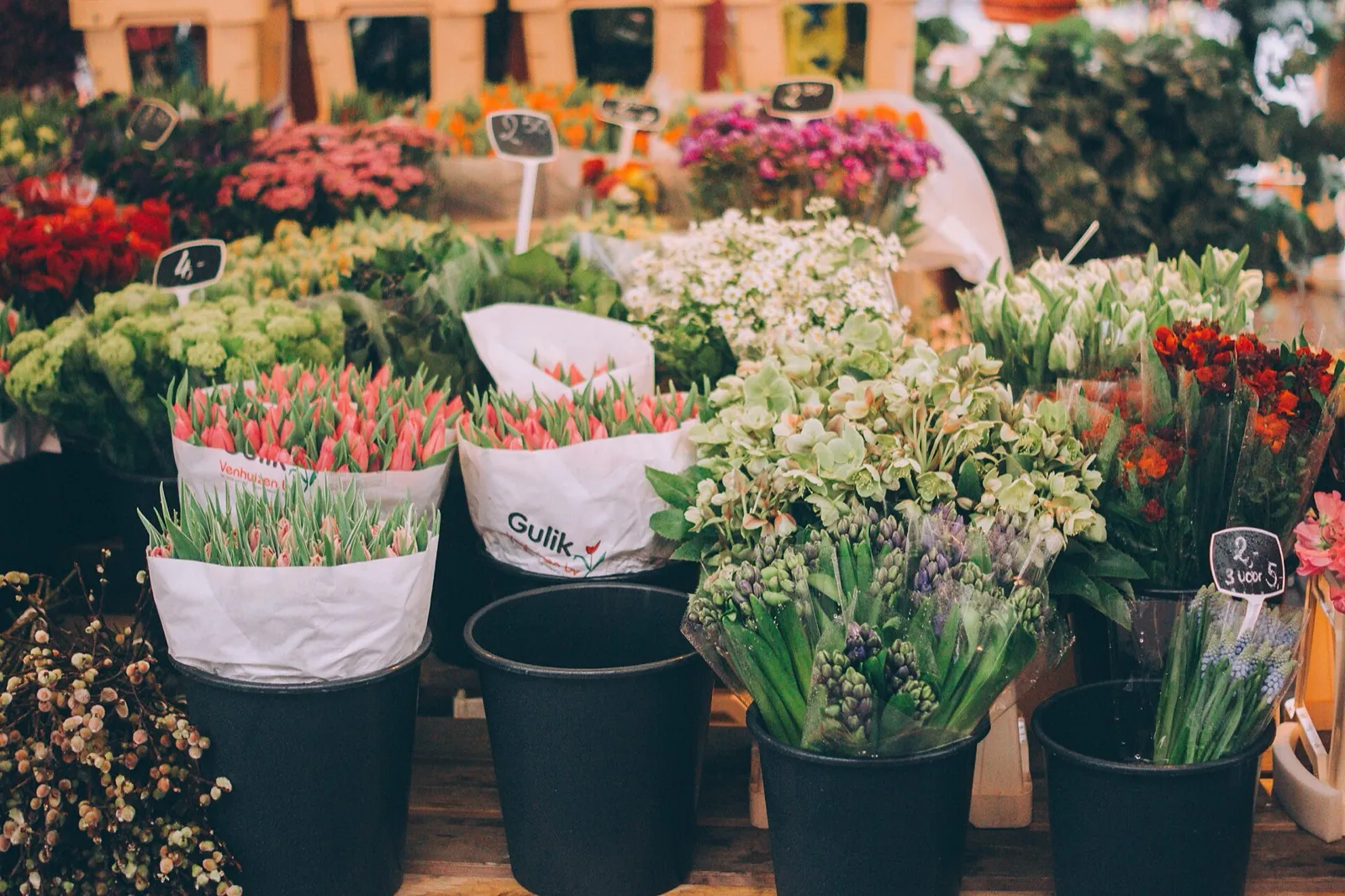
On a weekday morning the block is hard to miss. Buckets of cut flowers, potted palms, and flowering branches line the sidewalk, and vans idle at the curb while buyers load up.
A Short History of the Flower Market
New York’s flower trade is older than the block it sits on. According to the Municipal Art Society, the trade began on West Canal Street and moved to Union Square in 1891, and businesses opened shops on West 28th Street shortly after. Greenhouses developed in the late 1800s made it possible to grow cut flowers year-round, which turned a seasonal trade into a daily one.
The district is much smaller than it used to be. NY City Lens reported in 2015 that the market had up to 60 wholesalers at its peak and about a dozen at the time of writing (NY City Lens). The Municipal Art Society’s 2023 account notes continuing development pressure from hotels and residential projects.
What remains is a group of long-running, often family-owned businesses. Shops named in those reports include:
- Associated Cut Flower, which the Municipal Art Society says began on Sixth Avenue in 1957
- G. Page Wholesale Flowers, in business since 1984 according to NY City Lens
- Empire Cut Flowers, founded in 2002
- U.S. Evergreens, a family-owned shop founded in 1982 that specializes in flowering branches
- Caribbean Cuts, which sells exotic leaves, gingers, and tropical trees
Shops open, close, and move, so treat any list as a starting point and confirm before you make a special trip for one supplier.
Flower District Hours: When to Go
The flower market keeps florist hours, not retail hours.
- Opening: NY City Lens reported that most wholesalers on 28th Street open by 4:30 a.m. The Municipal Art Society puts opening at around 4 a.m.
- Trade rush: The first few hours belong to professional buyers from florist shops and event production companies.
- Closing: Many wholesale purveyors are closed by about 10:30 a.m., according to the Municipal Art Society.
- Supply shops: Stores selling vases, ribbon, and event supplies tend to keep longer hours. Time Out lists Jamali Garden at 149 West 28th Street as open Monday through Saturday from 6:30 a.m. to 5 p.m. (Time Out).
Hours vary by shop and by season, and they stretch around Valentine’s Day, Mother’s Day, and wedding season. Call ahead if you need a specific wholesaler.
| If you are… | Best time to go | Why |
|---|---|---|
| A florist or event designer | As early as the shops open | Best selection, and suppliers have time for trade orders |
| A small studio or new florist | Early, but after the first rush | Staff have more time to answer questions and set up an account |
| Buying for one event or for yourself | Mid-morning, around 8 to 9 a.m. | The trade rush has passed and many shops sell retail |
Is the NYC Flower Market Open to the Public?
Partly. The district is a wholesale market first, and some shops sell only to the trade. Others sell retail once the early rush is over. The Municipal Art Society notes that some wholesalers sell retail after their early-morning rush, and its advice to casual visitors is to avoid the first few hours, when professionals are buying.
If you aren’t a trade buyer:
- Ask before you browse. A quick “Do you sell retail?” at the door saves everyone time.
- Expect to buy by the bunch. Wholesale flowers are sold in grower’s bunches, not single stems.
- Bring something to carry them in. Wholesalers wrap bunches in paper. They don’t arrange or box them.
What Florists Should Bring
For florists and event designers buying for resale, a market run goes faster with a few things in hand:
- A resale certificate. New York State lists Form ST-120, the resale certificate, as the exemption document for purchases by vendors that are intended for resale (NYS Department of Taxation and Finance). Wholesalers will usually ask for it when you set up an account. If you’re just getting started, our guide on how to start a flower business covers registering for sales tax and getting a Certificate of Authority.
- Your recipe and stem counts. Know what each arrangement needs so you buy by the bunch without guessing.
- Substitutes. Availability changes daily. Have a second choice for each key flower.
- Buckets and water. Flowers that sit dry in a hot vehicle lose days of vase life.
- A way to pay. Ask each supplier what they accept before you load up.
- A plan for the curb. This is the part that catches new buyers, and it’s covered next.
Getting Flowers Back to Your Shop
West 28th Street is a narrow Midtown block that fills with vans before sunrise. Three sets of rules meet there.
Curb rules. The block falls inside the Midtown area where double parking isn’t allowed for any vehicle and where much of the curb is set aside for commercial vehicles during the day. A personal car or SUV doesn’t count as a commercial vehicle in New York City, even on a business errand. Our guide to NYC commercial vehicle parking explains who can stop where.
The congestion toll. Anything below 60th Street is inside the Congestion Relief Zone, so driving in for a market run means paying the toll. See NYC congestion pricing for deliveries for hours and rates.
The clock. Flowers are perishable from the moment they leave the cooler. The faster they get from the wholesaler’s bucket to your own cooler, the longer they last for your customer.
That leaves a florist three practical options:
- Go yourself, early. This works if you have a suitable vehicle, a legal place to stop, and someone to open the shop while you’re gone.
- Ask the wholesaler about delivery. If your supplier delivers to regular accounts, ask about minimums and timing.
- Send a courier for the pickup. You place the order by phone, and a driver collects it and brings it to your shop or straight to the venue. This suits studios in Brooklyn or Queens that can’t lose two hours of the morning to a Midtown round trip.
For event work, the third option often runs in two legs: a dawn pickup from 28th Street to the studio, then finished pieces from the studio to the venue. A florist delivery service can handle both, and you can estimate the cost of a flower market run before you commit to it.
Tips for Your First Trip
- Walk the whole block first. Prices and quality vary from shop to shop, and it only takes a few minutes.
- Dress for it. Sidewalks are wet, and coolers are cold year-round.
- Buy branches and foliage last. They’re bulky and awkward to carry while you shop for everything else.
- Build relationships. Regulars get calls when something special comes in and help when a wedding order runs short.
- Order ahead for big events. Wholesalers can bring in specific varieties and quantities with notice. Walking in the morning of a 200-guest wedding is a gamble.
- Avoid the week of a flower holiday if you can. Valentine’s Day and Mother’s Day bring crowds and higher prices.
Frequently Asked Questions
Where is the flower market in NYC?
On West 28th Street between Sixth and Seventh Avenues in Chelsea, Manhattan, with a few shops around the corner on Sixth Avenue.
What time does the NYC Flower District open?
Most wholesalers open around 4 to 4:30 a.m., and many close by about 10:30 a.m. Supply shops generally keep longer hours.
Can anyone buy flowers in the NYC Flower District?
Some shops sell only to the trade, but many sell to the public after the early-morning rush. Ask at the door.
Do you need a business license to buy wholesale flowers in NYC?
To buy tax-free for resale, you need a New York resale certificate (Form ST-120). Shops that sell retail will sell to anyone and charge sales tax.
What day is best to visit the flower market?
Weekday mornings are when the market is busiest and best stocked. Check with individual shops about Saturday hours, and don’t count on wholesalers being open on Sunday.
Can I get flower market orders delivered?
Ask your wholesaler whether they deliver to regular accounts. If they don’t, a courier can pick up a phoned-in order and bring it to your shop or venue.
The Bottom Line
The Flower District is smaller than it once was, but it’s still the fastest way for a New York florist to see and buy a full range of flowers in one morning. Go early, bring your resale certificate and your stem counts, and decide ahead of time how the flowers will get back to your cooler. Caterers and restaurants buying produce have a market of their own, covered in our Hunts Point Produce Market guide. If the Midtown curb is the part you’d skip, florist delivery can cover the market run and the event drop-off.