Courier Basics
What Is a Courier Service? How Local Couriers Work
What a courier is, what a courier service does, how it differs from UPS, FedEx, and the postal service, the main types of courier delivery, and when a business should use one.
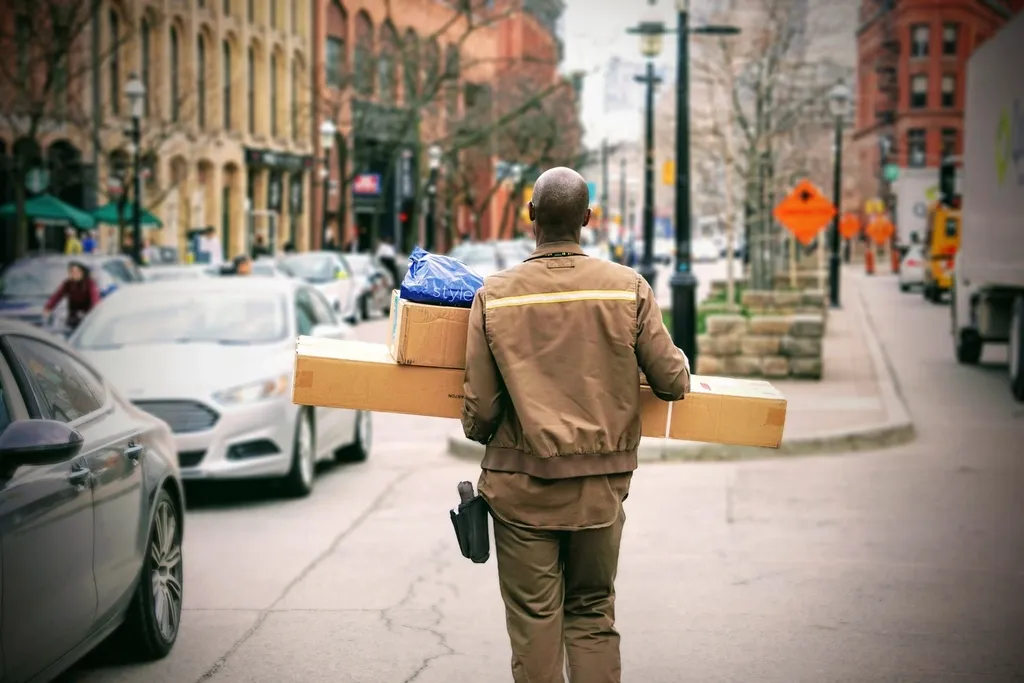
A courier is a person or company that picks up an item and carries it directly to its destination, usually the same day and without passing through a sorting warehouse. A courier service is the business that arranges those deliveries: it takes the order, assigns a driver or rider, and confirms when the item arrives.
The word traces back to the Latin currere, “to run” (Merriam-Webster), and the idea hasn’t changed much: a courier moves something from one hand to another as directly as possible. What has changed is how businesses use couriers, from same-day catering drops to recurring multi-stop routes.
Key takeaways
- A courier carries an item directly from pickup to drop-off, usually the same day, instead of routing it through a hub.
- Couriers are used when speed, timing, or careful handling matter more than the lowest possible price per package.
- Common types include on-demand, scheduled, multi-stop, and white glove delivery.
- Courier pricing is driven by distance, timing, vehicle size, stops, and handling, not package weight alone.
What Does a Courier Do?
A courier picks up an item from a sender, keeps custody of it for the whole trip, and hands it to the recipient, often with a signature or a photo as proof. Because one person handles the item from start to finish, there is no hand-off between trucks, depots, and sorting lines.
A typical courier delivery looks like this:
- The order is placed with the pickup address, drop-off address, timing, and any handling notes.
- A courier is assigned based on location, vehicle size, and availability.
- The courier picks up the item, confirms what was loaded, and heads straight to the destination.
- The delivery is tracked in real time, so the sender and often the recipient can see where it is.
- The courier completes the drop-off and records proof of delivery, such as a signature, photo, or delivery note.
In a city like New York, the courier also handles the parts of the job a map doesn’t show: loading-dock check-ins, freight elevator windows, building security desks, and where it’s legal to stop.
Courier vs. UPS, FedEx, and the Postal Service
The main difference is the route. A courier delivers point to point. Parcel carriers deliver through a network.
| Local courier | Parcel carrier or postal service | |
|---|---|---|
| Route | Direct from pickup to drop-off | Pickup → sorting hub → delivery route |
| Typical speed | Within hours, same day | Next day to several days |
| Pickup time | When you need it | Scheduled pickup or drop-off location |
| Handling | One person handles the item | Several hand-offs and sorting |
| Best for | Urgent, fragile, timed, or high-value items | Standard packages where cost per box matters most |
| Price driven by | Distance, time, vehicle, stops | Weight, dimensions, service level |
Parcel networks are built to move very large volumes cheaply, which is why they batch packages through hubs. A courier trades some of that scale for control: the item goes straight there, at a time you choose, with one set of hands on it.
Types of Courier Services
Most courier services offer several delivery modes, and a single business often uses more than one.
On-demand (same-day) delivery
An on-demand courier is booked when you need it and picks up as soon as possible, typically within the hour. This is the classic “we need this there today” delivery: a forgotten catering order, a replacement part, or signed documents that can’t wait for overnight shipping.
Scheduled delivery
A scheduled delivery is booked ahead for a specific pickup time or delivery window. It suits orders you know are coming, such as a lunch delivery for a Thursday office meeting or a Saturday event.
Recurring routes
Recurring routes repeat on a fixed schedule, for example every weekday morning. Bakeries supplying cafés, meal prep kitchens delivering weekly orders, and wholesalers restocking accounts often run this way, because the same couriers learn the stops and the timing becomes predictable.
Multi-stop delivery
A multi-stop route picks up once and delivers to several recipients in one trip. It usually costs less per stop than sending separate couriers, especially when the stops are close together.
White glove delivery
White glove delivery adds careful handling, and sometimes setup, at the destination. It’s used for fragile, high-value, or presentation-sensitive items. Our guide to white glove delivery covers it in detail.
Specialized couriers
Some couriers focus on one type of cargo, such as medical specimens, legal documents, or temperature-controlled goods. These usually come with extra training, chain-of-custody records, or equipment requirements.
When Should a Business Use a Courier?
Use a courier when the delivery has a deadline, a fragile item, or a customer waiting on the other end. In practice, that includes:
- Time-critical orders, such as catering that must arrive before a meeting starts.
- Fragile or presentation-sensitive items, such as cakes, flower arrangements, or artwork.
- Local business-to-business supply, such as restaurants and cafés restocking from a local producer.
- Documents and small items that need to arrive today and be signed for, which is what a messenger service handles.
- Overflow capacity, when your own drivers are fully booked or you don’t want to run a fleet.
For standard packages with flexible delivery dates, a parcel carrier is usually the cheaper choice.
How Much Does a Courier Cost?
Courier pricing is based on the work a delivery takes rather than a fixed rate per package. The main factors are:
- Distance and route, including bridge, tunnel, and congestion pricing tolls in New York.
- Timing and urgency: an immediate pickup costs more than a delivery scheduled a day ahead.
- Vehicle size: an SUV, minivan, or cargo van is chosen by how much the load needs.
- Number of stops on the route.
- Handling and wait time, such as loading-dock check-in or signature collection.
The fastest way to see a real number is to enter a pickup and drop-off in the delivery cost calculator.
How to Choose a Courier Service
When comparing courier services, look beyond the price of one trip:
- Live tracking you can share with your customer.
- Proof of delivery, such as photos, signatures, or delivery notes.
- Vehicle options that match your loads, so you aren’t paying for a van to move a single box.
- Consistency: the ability to keep working with couriers who already know your pickup routine.
- Support you can reach while a delivery is still in progress.
- Local knowledge of the neighborhoods, buildings, and rules where you deliver.
Frequently Asked Questions
What is the difference between a courier and a delivery driver?
The terms overlap. “Courier” usually means direct, time-sensitive delivery of a specific item from sender to recipient. “Delivery driver” is broader and includes drivers on fixed parcel routes who deliver many packages from a sorting hub.
Is a courier faster than overnight shipping?
For local deliveries, yes. A courier travels directly from pickup to drop-off, so a delivery across the same city is typically completed within hours rather than the next day.
Can a courier deliver to multiple addresses?
Yes. Multi-stop routes pick up once and deliver to several addresses in one trip, which usually lowers the cost per delivery.
Do couriers deliver large items?
It depends on the vehicle. Many courier services offer cars and SUVs for small loads and minivans or cargo vans for larger ones. Check the maximum size and weight when booking.
The Bottom Line
A courier service gives you direct, trackable, same-day delivery with one set of hands on the item from pickup to drop-off. It costs more per package than a parcel network, and it’s worth it when timing, handling, or the customer experience matters. To see what a delivery across Manhattan, Brooklyn, or the rest of the city would cost, try the delivery cost calculator.